
Principles of managing soil degradation and erosion
1. Understand your erosion risk
Erosion risk is influenced by physical factors such as soil type and slope, in combination with the prevailing climatic conditions. How these factors interact on your property will determine what land use practices will be suitable for your block.
Geology and Soil
The location in the landscape, soil permeability, texture and structure all influence the erodibility of soil.
Soil permeability affects how well water can move through the soil. Low permeable soils increase surface runoff and the risk of mass movement, particularly along steep slopes where vegetation has been removed. Permeability is also reduced in soils compacted by animals or machinery.
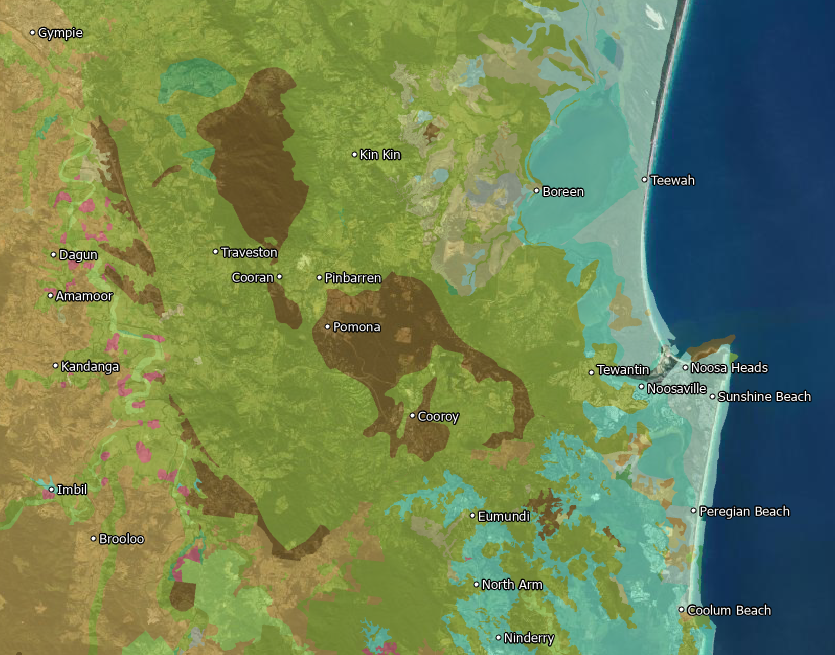
Check out the map of Noosa’s broad soil types to understand their erodibility risk.
Slope
Water erosion increases with steepness and slope length. The steeper the slope, the faster and more forceful the runoff. The longer the slope, the greater the volume of water in the runoff. Doubling the slope percentage approximately doubles the soil loss on slopes that are likely to erode.
The shape of a slope indicates how stable it is. Straight slopes and S-shaped slopes tend to be more stable than concave or convex slopes.
Climate
Climate factors influencing erosion are rainfall, temperature and wind speed.
Rainfall is the main climatic influence on erosion in our region. The intensity, frequency and seasonal variation of rainfall can govern the type and severity of the erosion.
Drop down each climatic factor to get a deeper understanding on how they influence erosion risk.
2. Provide cover on the soil surface
The most efficient cover for large land areas is living plants because:
Plants protect the soil by providing canopy cover (more than 5 cm above the soil surface) and contact cover (up to 5 cm above the soil surface). Canopy and contact cover both protect the soil against raindrop impact, but contact cover is more effective in protecting soils because it slows runoff so that water infiltrates into the soil and deposits any dislodged sediment around the plants. Good contact cover is crucial on sloping country.
Vegetation, ideally a diverse mixture of canopy, shrub and groundcover vegetation, also influences the soil water cycle and in turn can reduce risk of land slips and slumping on moderate slopes and stream banks. Vegetation aids evapotranspiration which reduces soil saturation. This is particularly important for soils with impermeable or low permeability subsoil or geology substrate.
A note on mulch
Biodegradable organic mulches such as woodchips, straw or compost provide quick short-term protection from raindrop impact, assist the soil to hold moisture and enrich the soil with organic matter.
The establishment of living plant cover should be the objective for the site for long-term stabilisation and erosion management.
3. Control runoff before it develops into an erosive force.
With frequent high rainfall, surface run-off is likely as the soil profile become saturated. As water runs off, it naturally tends to concentrate into progressively larger and more powerful flows.
In modified landscapes (e.g. built environments and agricultural landscapes) runoff control measures can be put in place to help reduce the risk of erosion.
This may include:
Poorly designed or implemented control measure can easily exacerbate erosion problems. Technical advice on control structure is recommended to ensure these interventions are effective.
Plant cover, particularly groundcovers are integral in helping reduce run-off volume and velocity. For sloping country, maintaining 90-100% groundcover is recommended because of our high rainfall. In drainage lines where water is concentrated 100% groundcover is required to prevent erosion. The density of plant cover can further reduce the erosive force of surface run-off. For example, dense pasture is more effective than a mown lawn at reducing the volume and velocity of run-off.
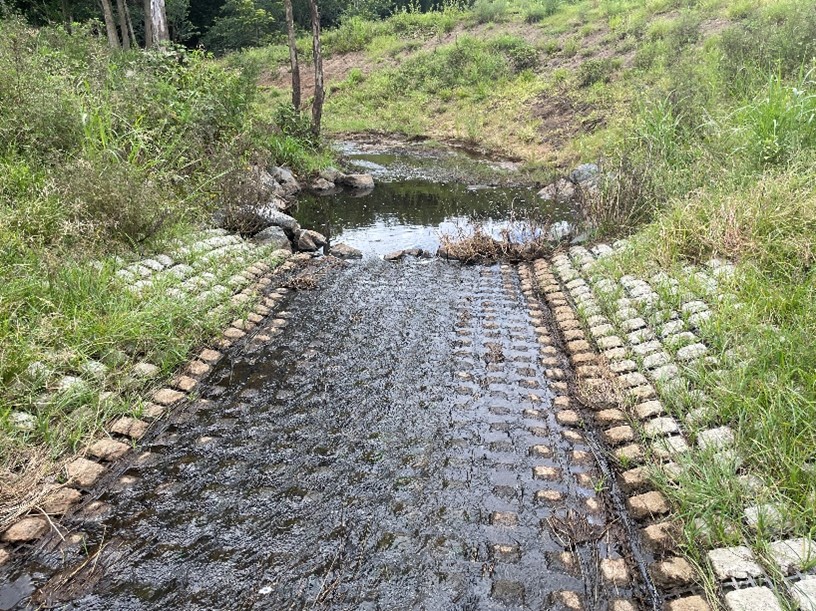
Inorganic groundcovers, such as rocks, can be useful in helping reduce water velocity and stabilise waterway channels, drainage lines and dam overflows. Rock size, shape and placement should be carefully considered to ensure they are effective.
A note on run-off
Rainfall becomes runoff when the soil cannot absorb the falling rain. Once rainfall is greater than the soil’s capacity to absorb it, water collects on the soil surface and runs off into drainage lines.
As the water flows across the surface, the force of the flow detaches and transports soil particles. The topsoil often has greater infiltration capacity than the subsoil, so once the topsoil is saturated, runoff will increase because the rainfall cannot infiltrate the subsoil quick enough.
Resilient Waterways
Waterways and the riparian land surrounding them have undergone significant modification as a result of human activity. Clearing riparian vegetation to make way for farmland and development, stream channel straightening, gravel extraction and de-snagging of waterways have tipped the scale on waterway erosion in many parts of Australia. The sediment that becomes mobilised from riverbank and bed has widespread impacts on waterway health, biodiversity, carbon storage, and the wellbeing and lifestyle of surrounding communities.
Protecting and restoring native vegetation along waterways is one of the greatest tools in regaining an equilibrium of erosion and deposition in a waterway and building resilience to withstand the erosive force of major floods.
Vegetation protects waterways from erosion by:
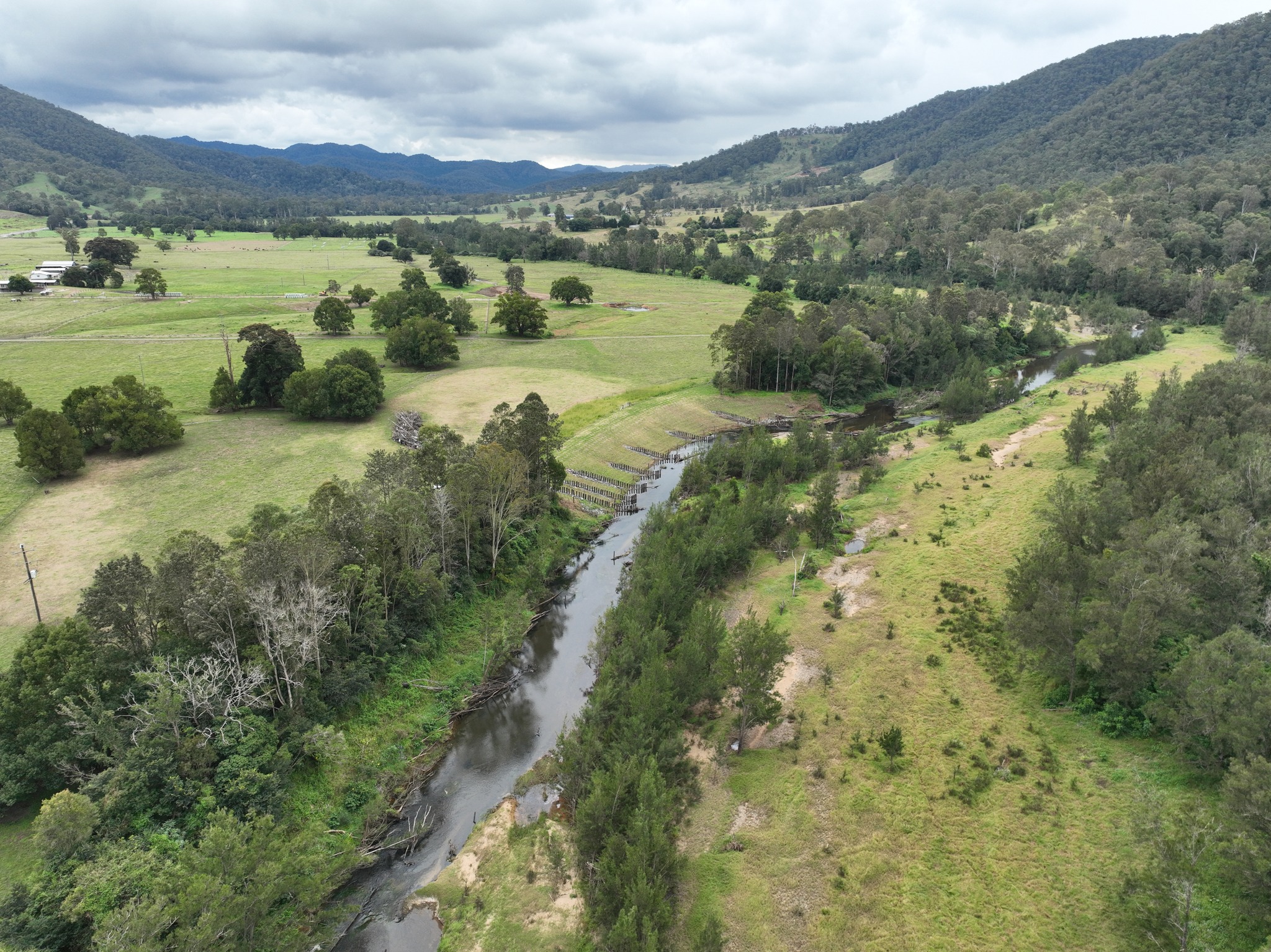
For highly eroded waterways, planting native vegetation may not be the only tool you can, or need, to use. Bank reprofiling, installation of rock, timber pile fields and other engineered structures can be used to help aid stabilisation, particularly while plantings are establishing. It is important to seek advice from your local council, Landcare or catchment group to understand the best remediation options for your waterway.
Ensuring the waterway has a wide buffer of vegetation is also very important. The appropriate width of a riparian buffer can vary depending on the size of the waterway, the steepness of its banks, and the extent of erosion. As a general guideline for bank stabilisation, riparian plantings should extend at least 5 meters from the bank crest onto the floodplain. Ideally, the total width should be calculated by adding the vertical height of the bank (from toe to crest) to this minimum 5-metre buffer. Where active erosion is occurring, you must factor in the average erosion rate (meters/year).
Use this ‘simple’ equation to help you work out your riparian buffer width:
Minimum width (5m) + Bank height + (Erosion rate X years for tree to reach maturity)
= Riparian buffer width
E.g. 5m + 10m + (0.5m X 20yrs) = 25m riparian buffer from the bank crest.
The bigger the buffer you can create the better!
Discover more practical strategies for erosion control and remediation. Explore the resources below to learn more.
Please note that not all resources are Sunshine Coast specific.
We recommend seeking advice from your local Council, Landcare, Catchment, or Land for Wildlife group before starting major erosion remediation work.